
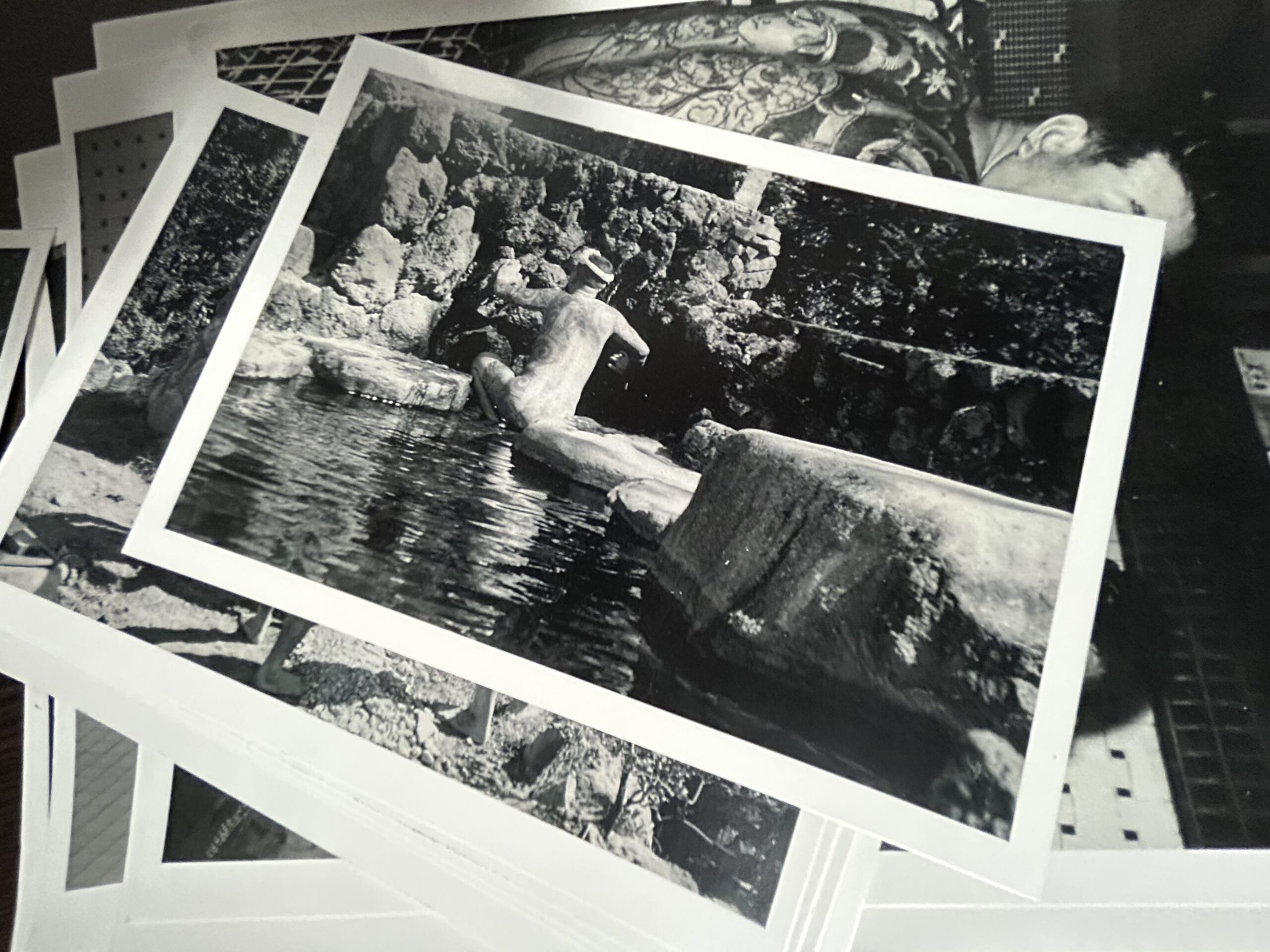
Okachimachi Horibun first!
Okachimachi Horibun first, second and third are heroes. Why? A legacy, a myth, just out there doing it! Not looking for recognition and got their family set up going strong. No webpage, no pictures of recent stuff, is 100% down my alley.
No way to connect if you don´t know how.
The real way…
What about tattooing in modern day Tokyo?
Speaking about Horimono in the modern day is a topic with a broad range spectrum. It leads us all the way round from bizarre underground stories all the way to anime series flooding our imagination to numb us from the present, lending the feeling of normality. Whats normal? All things new? The present? Everything you can see at a click?
What about those hidden, not so available treasures. It seems tattooing is undergoing an embarrassing shift between holding back the importance of once keeping a secret and now openly broadcasting the simpelst content daily. It’s all about attention, isn’t it?
Those posting everyday possibly becoming those who then regret being childish attention seekers in the future.
So this brings the question why I am writing about it? …and I take pride writing about things that concern myself, so having these pictures kind of causes that to be legit.
Lets move on…
Keeping a low profile
Tattooing in Japan dates back and has it’s originating stages from the Jomon Period. Archaeological findings like tattooed clay figures and pottery images make sure to convince that tattooing had and still has a certain significance in the ancient Japan.
Irezumi has not solely been used for ritual, social and decorative purposes, overtime it was used to mark criminals, outcasts until it eventually shifted to being used by firefighters, miners, construction workers and early day messengers.
It was flourishing, doing to well. After some time tattooing was banned by the japanese government in 1870 and tattoo artists kept low profile until the ban was lifted after the second world war in 1948. Largely continuing underground for a while, the american GI’s stationed in Japan connected with carvers (japanese Horishi) until it became fashionable again and the ban was lifted.
Fast forward to the 1970`s and connecting with Horibun
The young Martha Cooper keeps her lens on the most interesting subjects regarding art. She is an exciting American woman who has studied at Oxford University and moved to Tokyo by 1969.
I have been a real fan of hers for decades, as she has been the author of “Subway Art” from 1984. As for tattooing and graffiti, I truly identify her to be the most influential subculture photo journalist of our time. Just imagine how focused you have to be to get that one snap. Electricity, tracks, trains, gangs and the shadows of the nightly underground, all add up to the daring in those days.
Tokyo tattoo 1970 was Martha Coopers first adventure into a subculture. Horimono being an art that was only accessible to few, she somehow managed to find Okachimachi Horibun first. An Artist working in the Ueno, Tokyo area.
Bunzo Yamada is Horibun first
Horibun’s real name was Bunzo Yamada. working as a shigotoshi (japanese construction worker), in fact all three generations of the Horibun family were. Working in the day, tattooing in the night.
Martha Cooper and Spider Webb
Fun fact: Martha Cooper herself was tattooed by legendary Spider Webb in NYC. A phenomenal tattooer known for his unique ideas and brilliant character. So good for them!
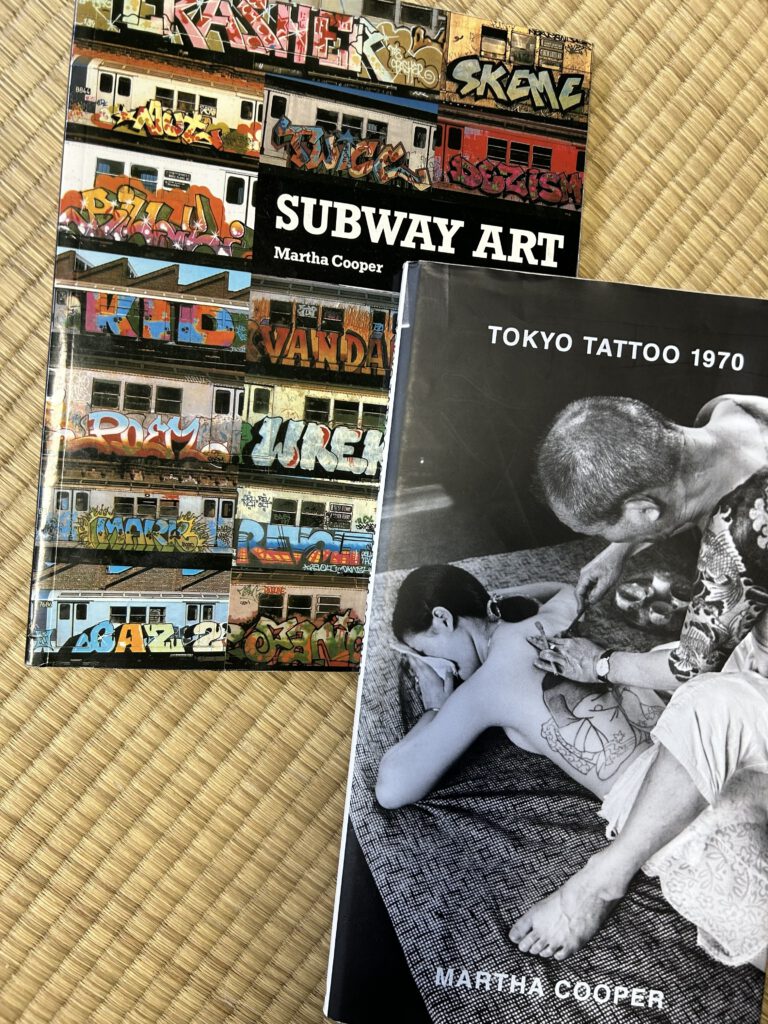
Photo art and stories from Japan
Initially I am not sure who made these pictures. Having a good overview, I can say that they are not in any well known publications.
Ichiro Morita Photography
Accumulatively assuming they may be unpublished, it can still be played with the idea that the photographer may be no less than Ichiro Morita, a japanese photographer, who frequently visited Okachimachi Horibun first. It’s extremely rare to see this kind of photography. The paper they are printed on is the kind you you see when watching movies. Those made under the red lamp in a darkroom. Quality foto development without unwanted exposure.
Works signed by Okachimachi Horibun first
These pictures were the set that had been taken from the originals. Japan to Canada to Germany and now to the US.
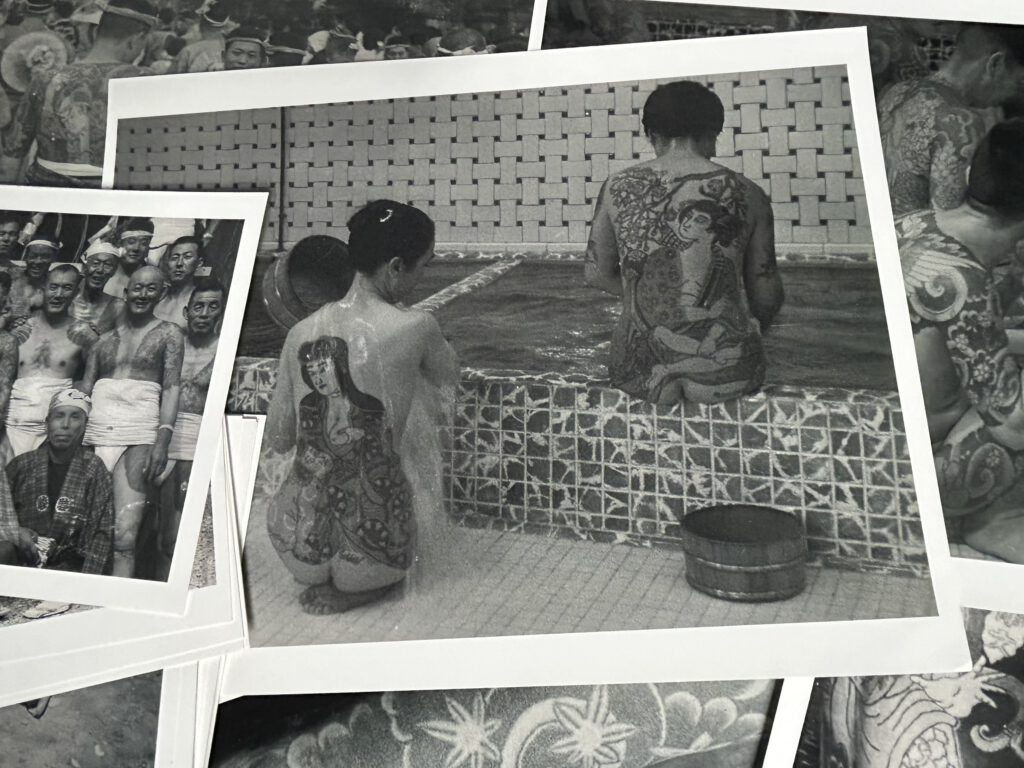
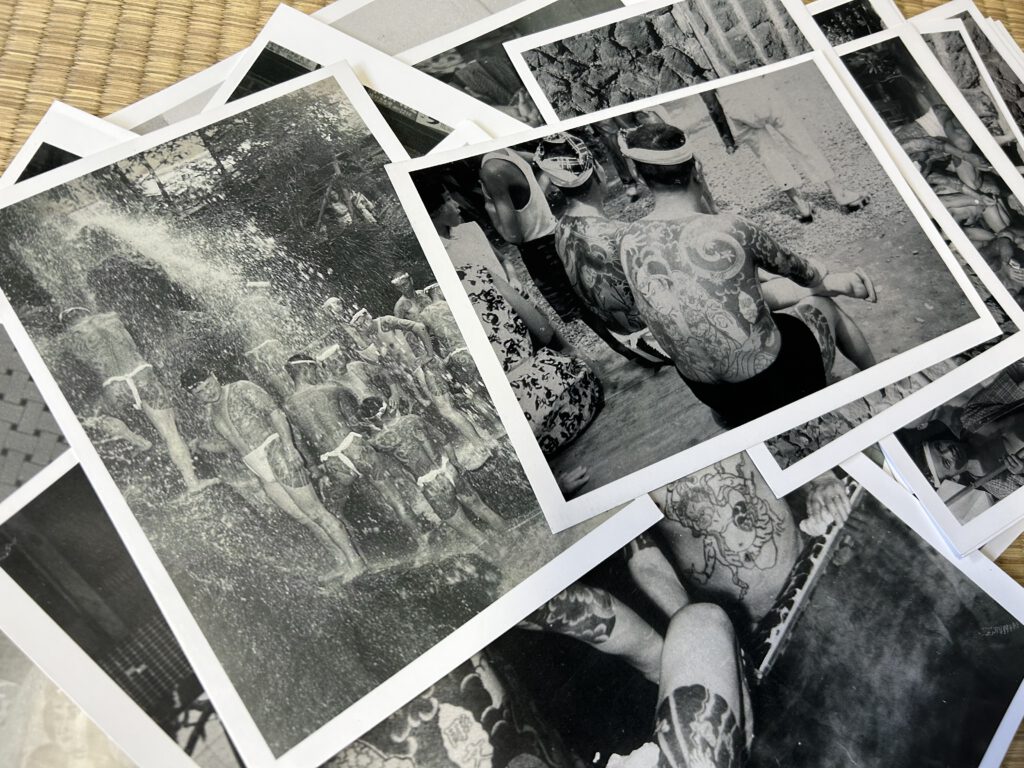
These pictures have been in my possesion for over 10 years. In all there are 16 photos in A5 size and 10 photos that are a little smaller than A4 size. For your imagination they are described as festival fotos, public bath and group pictures under a waterfall. Some works on the bodies are signed “Horibun”.
I got a phone call from my friend Jay in North Carolina, asking if the pictures were still available.
The importance about tattooing is that special items should stay with dedicated individuals, instead of going to a random crowd.
So they have found their way to America for now!
Horibun pictures between wanderers and workers
Hardly any picture of Horibun family can be found online. Actually its common that many Horishi do not show their clients work online at all. Perhaps just a lingering effect of those prohibition years and in fear of persecution as many are associated with unlawfulness.
Thought i would add an awesome memory, how I can look back on those 10 minutes in May 2019. I was standing at the roadside of a convenience store in Asakusa with a well known Horishi from the neighborhood. Horibun the second coincidentally passed by. Short good mornings, introductions and sweet talk was exchanged before we headed off to the festival again and Horibun went about his day.
Protecting the future
Surely it’s a difficult decision to take, showing or not showing pictures that could well be of public interest. However, lets agree that those seldom and special pictures should be protected. Meanwhile dozens of books have been paged openly on the net and it does take a big advantage from those who invested money for knowledge.
So I am keeping a hand over the vast majority of these pictures for the new owner.
I allow myself to post a just a glimpse of them here and hope you enjoy them.
Thank for READING and your understanding.
So long…